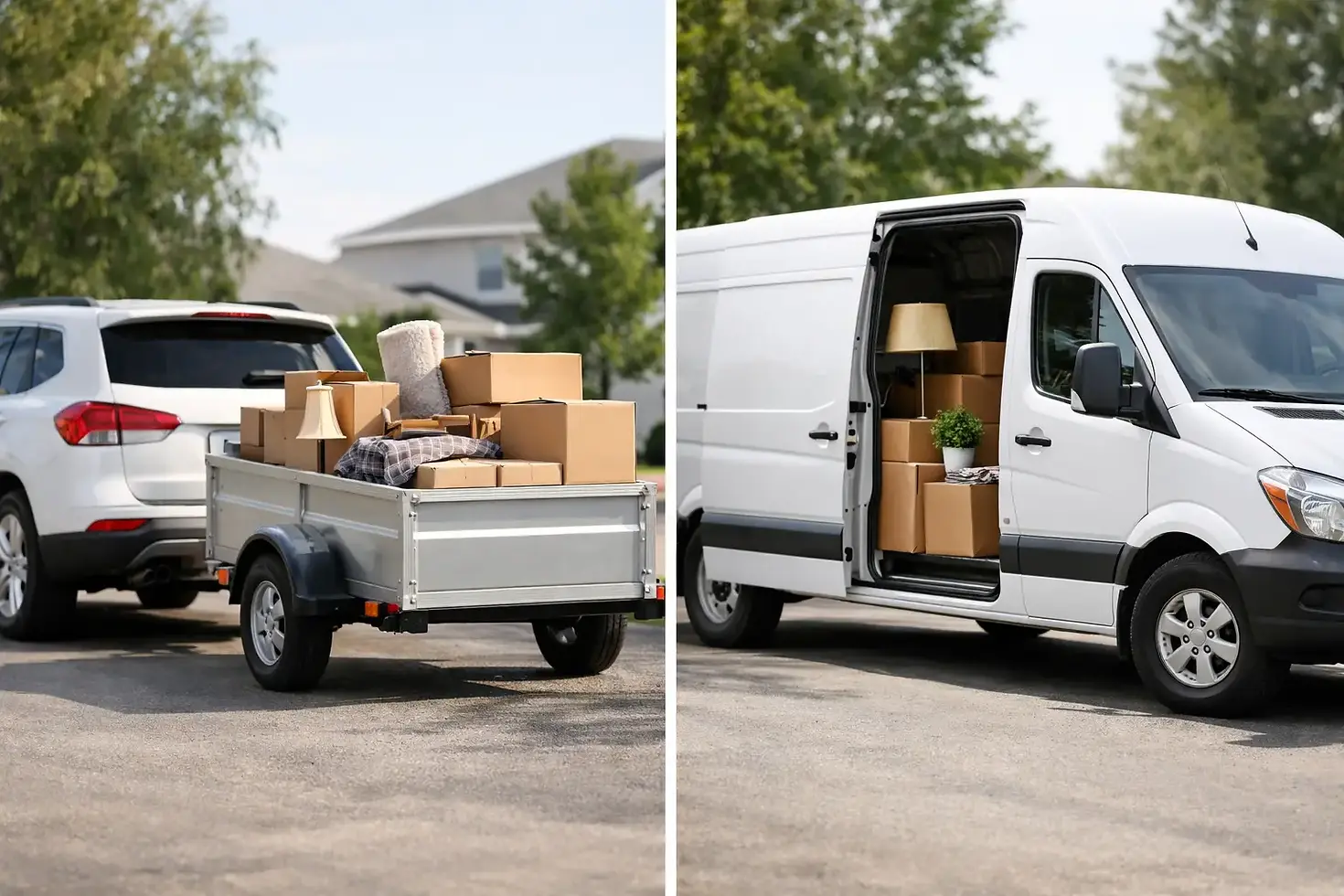
Trailer Rental Versus Cargo Van for Your Move
A trailer rental versus cargo van decision usually comes down to one question: do you need more space, or do you need a vehicle? For a garage cleanout, small move, furniture pickup, or job-site haul, choosing the right setup can save money, time, and a whole lot of lifting twice.
A trailer is often the better value when you already own a capable tow vehicle. A cargo van can be the simpler answer when you do not have a hitch, do not want to tow, or need an enclosed vehicle for a quick run across town. Here is how to choose without paying for more than your project needs.
Trailer Rental Versus Cargo Van: Start With the Load
Do not choose based on what looks bigger in the parking lot. Start with what you are hauling.
A trailer works especially well for bulky, awkward, or dirty loads. Think yard waste, renovation debris, old furniture, appliances, mattresses, lumber, scrap material, and garage clutter. Open utility trailers are easy to load from the sides and back. You can often fit oversized items that would be difficult to angle through cargo van doors.
A cargo van makes more sense for boxed items, smaller furniture, business deliveries, and belongings that need protection from rain, wind, or road grime. If you are moving clothes, electronics, paperwork, tools, or clean household items, an enclosed cargo area offers peace of mind. It also keeps your load out of sight while you make stops.
The shape of the load matters as much as the amount. A tall dresser may fit upright in a trailer but not under a cargo van roof. A stack of moving boxes may be better protected and easier to organize in a van. Measure your biggest items before booking. Guessing is how a one-trip job turns into two trips and an afternoon disappears.
When a Trailer Rental Is the Better Deal
If you have a vehicle with the right towing capacity, hitch, wiring, and trailer connection, a trailer rental can give you a lot of hauling room for a reasonable price. It is a practical choice for homeowners and renters who need to move a larger load but do not need a full moving truck.
Trailers are built for the kind of jobs that make a vehicle interior miserable. Hauling bags of yard debris, broken fencing, old shelving, concrete chunks, or dusty renovation waste in a cargo van can mean extra cleanup and possible restrictions. With a trailer, loading is more straightforward and cleanup is usually easier.
A trailer is also useful when heavy lifting is part of the job. The lower deck height on many utility trailers can make loading heavy items less of a climb than lifting them into a van. A ramp can make an even bigger difference for lawn equipment, wheeled carts, or appliances.
The catch is towing. You need to be comfortable with wider turns, longer stopping distances, backing up, and watching your mirrors. If you have never towed before, a packed rental day may not be the best time to learn. You also need to secure every item properly. A trailer gives you open space, but that space only works safely when the load is balanced, tied down, and covered when needed.
Before renting a trailer, confirm these four basics:
Your vehicle is rated to tow the loaded trailer safely.
Your hitch, ball mount, safety chains, and electrical connection are compatible.
You have straps, tarps, and moving blankets for the load.
You know where you can park, turn around, and unload at both locations.
When a Cargo Van Makes More Sense
A cargo van is the easy-button choice for many smaller moves and deliveries. You pick it up, load it, drive it, unload it, and return it. There is no hitch setup, no trailer sway to manage, and no backing a trailer into a narrow driveway.
For apartment moves, cargo vans can be a strong option when you have several boxes, a few small furniture pieces, and a short distance to travel. They are also handy for picking up marketplace purchases, delivering inventory, moving office supplies, or bringing tools and materials to a job.
The enclosed cargo area is the biggest advantage. Weather is unpredictable, and a wet mattress, soaked cardboard box, or muddy upholstered chair can create a bigger problem than the move itself. A van keeps your belongings covered without stopping to tarp and retarp the load.
Still, cargo vans have limits. The interior height and door opening can restrict larger furniture. Wheel wells take up floor space. You may need to lift items higher to get them inside, and a dirty or sharp load can damage the cargo area. Rental rates can also rise with mileage, fuel, insurance, and extra rental time. Read the terms before assuming the advertised daily rate is your final cost.
Cost Is More Than the Rental Price
The cheapest option on paper is not always the lowest-cost solution. A trailer may have a lower rental rate, but it only makes sense if your tow vehicle is ready and you can safely handle the job. If you need to buy hitch equipment, make extra trips, or spend hours figuring out tie-downs, the savings can disappear.
A cargo van may cost more upfront, but it can be worth it when convenience matters. If you are moving on a tight schedule, dealing with rain, or heading to several locations, one enclosed vehicle may reduce stress and protect your belongings.
Also consider fuel. A loaded trailer adds drag and weight, especially on longer drives. Cargo vans use fuel too, but the difference depends on the size of the van, the load, the route, and your personal vehicle. Do not forget cleanup charges, late-return fees, mileage limits, and disposal fees if your project involves junk.
For many Regina-area cleanouts, the real value comes from avoiding repeated trips. Rent enough capacity to finish the job efficiently, but do not rent a large vehicle just to haul a few boxes and a lamp.
Safety and Loading Make the Difference
Whether you rent a trailer or a cargo van, loading it correctly protects your belongings, your vehicle, and everyone else on the road.
Put the heaviest items low and toward the front. In a trailer, weight should be balanced from side to side and positioned correctly over the axle area. Too much weight at the back can make towing unstable. In a cargo van, keep heavy pieces against the front wall of the cargo area and secure them so they cannot shift during braking.
Use straps for furniture, appliances, and anything that could slide. Wrap wood furniture and fragile pieces with moving blankets. Keep loose debris contained in bags, bins, or boxes. If you are hauling junk, separate materials when possible. Metal, electronics, paint, chemicals, and other restricted items may need different disposal handling than regular household waste.
Never overload either option. A trailer's open bed can make it tempting to pile items high, while a cargo van can feel roomy until the doors will not close. Staying within the load rating is not just a rule. It keeps steering, braking, tires, and suspension working the way they should.
The Best Choice for Common Jobs
For yard cleanup, renovation debris, bulky junk, landscaping material, and oversized furniture, a trailer is usually the practical choice if you can tow it safely. It is easier to load, handles messy material well, and gives you flexible space.
For a small apartment move, protected deliveries, boxed belongings, tools, and bad-weather hauling, a cargo van often earns its higher cost through convenience. You get an enclosed space and a simpler driving experience.
If the job includes heavy furniture, stairs, a packed garage, or a load you do not want to sort, lift, and dispose of yourself, renting equipment may not be the best use of your time. Grunts Hauling Junk can provide the muscles, hauling, and responsible disposal so you can skip the trailer setup, van rental, and dump run.
Pick the option that makes your project easier to finish safely in one solid effort. The right rental should take work off your plate, not add another problem to solve.


Comments